
FROM THE YELLOWSTONE PIPELINE SERIES AND THE SHADOW SITE SERIES
SPONSORED BY MISSOULA ART MUSEUM
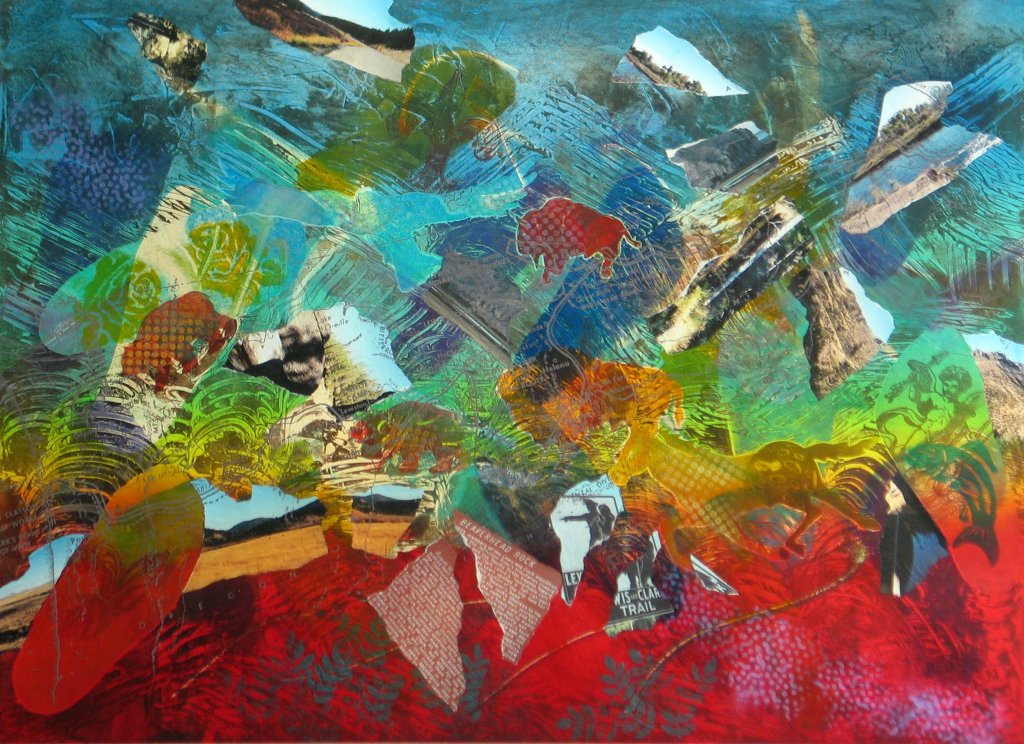
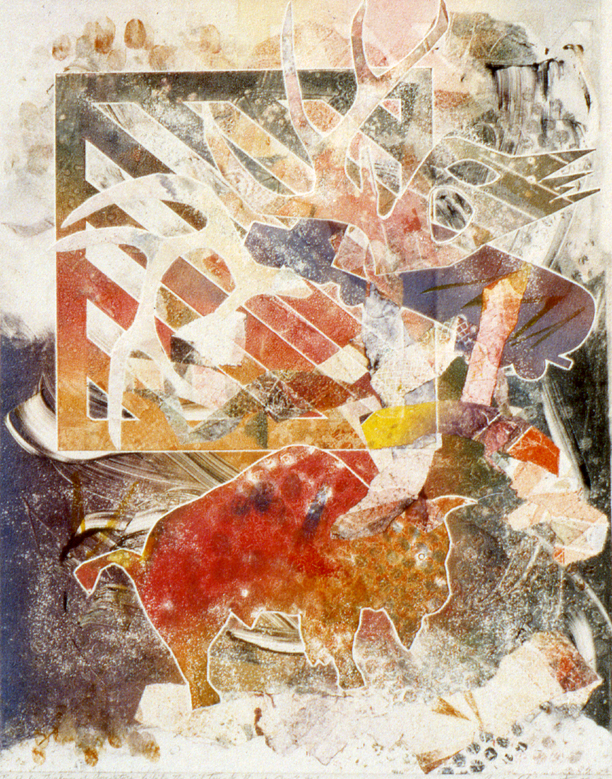

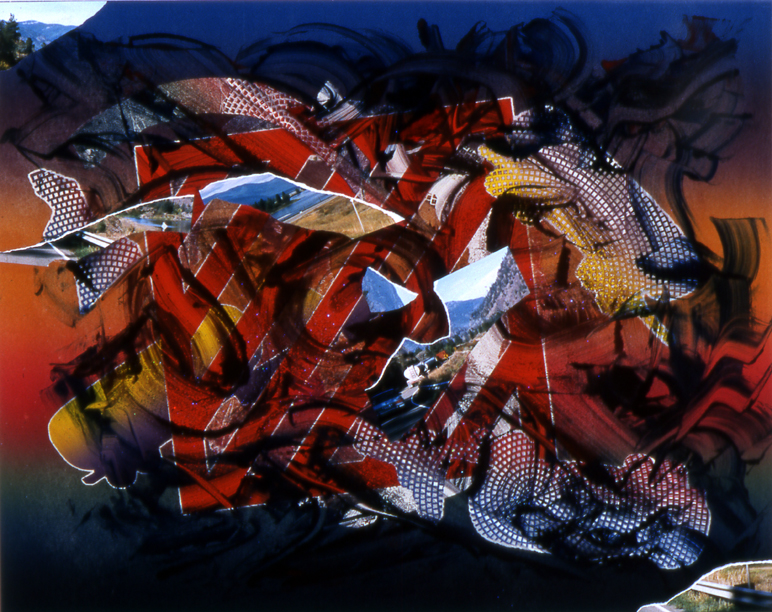
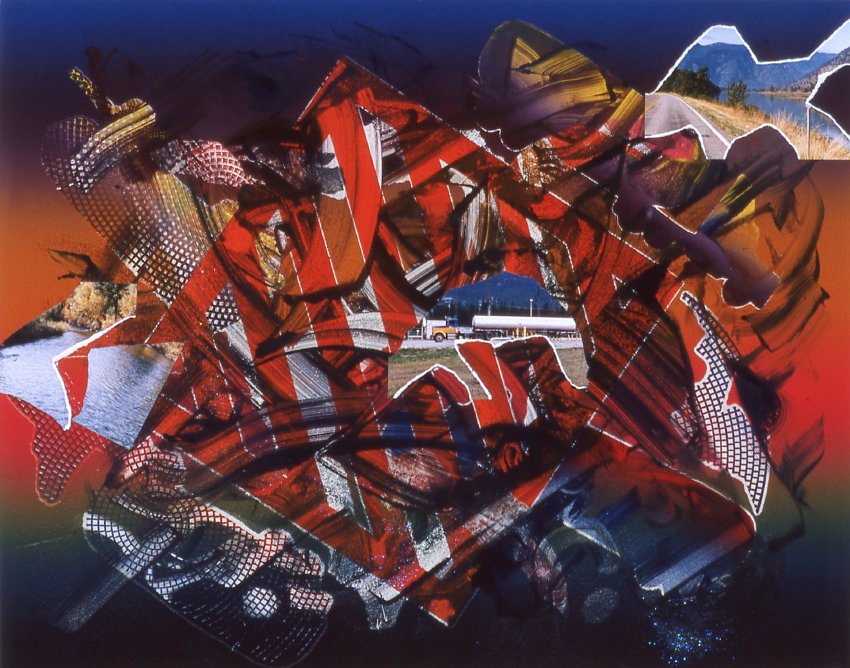


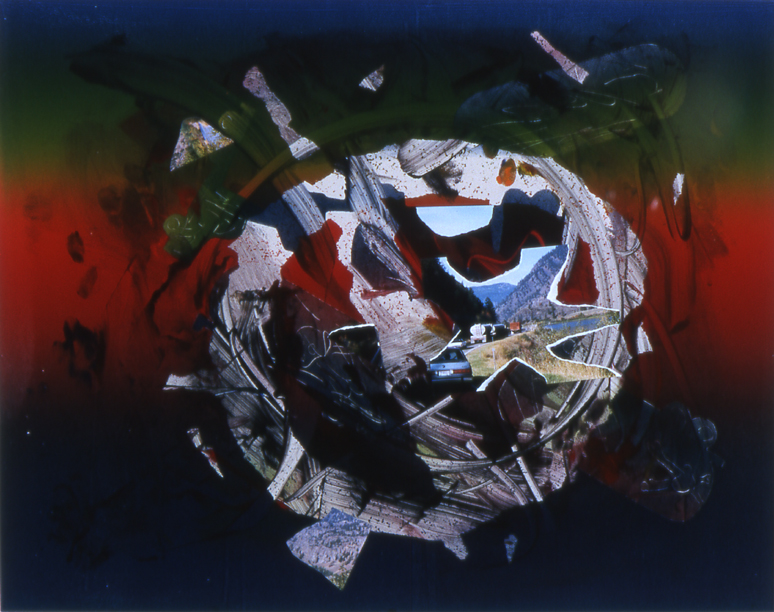


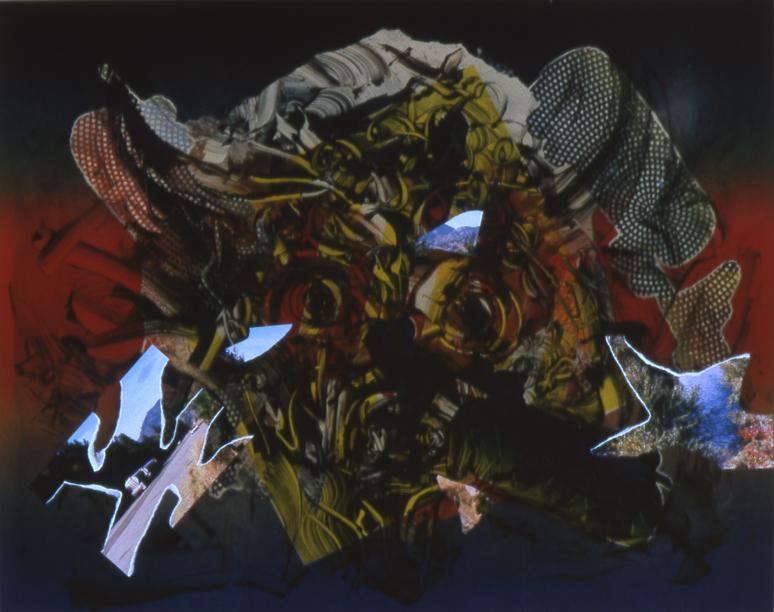
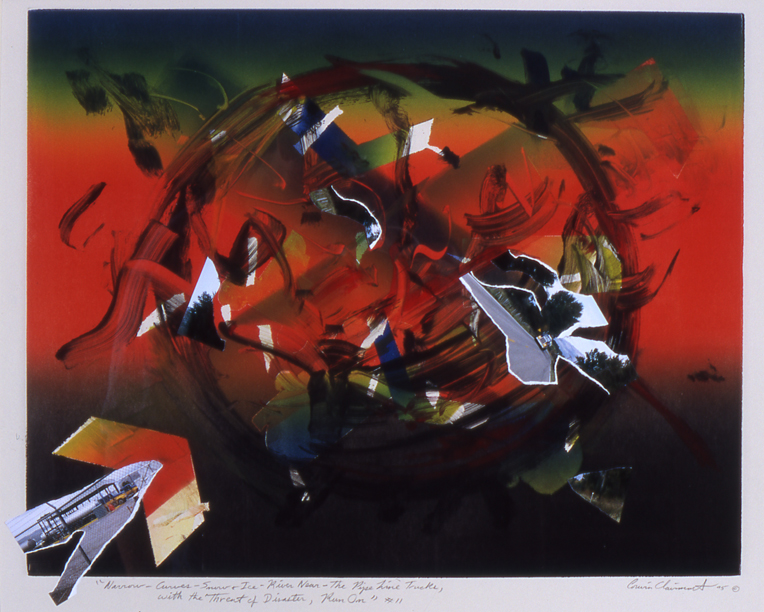
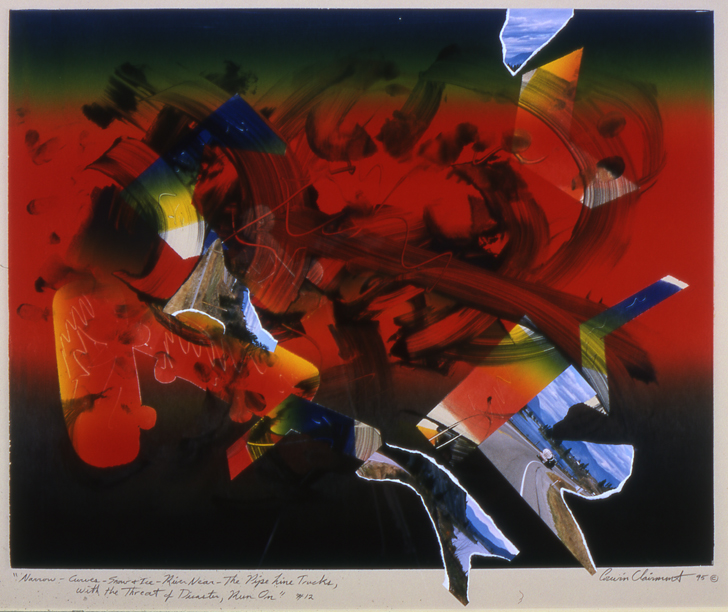


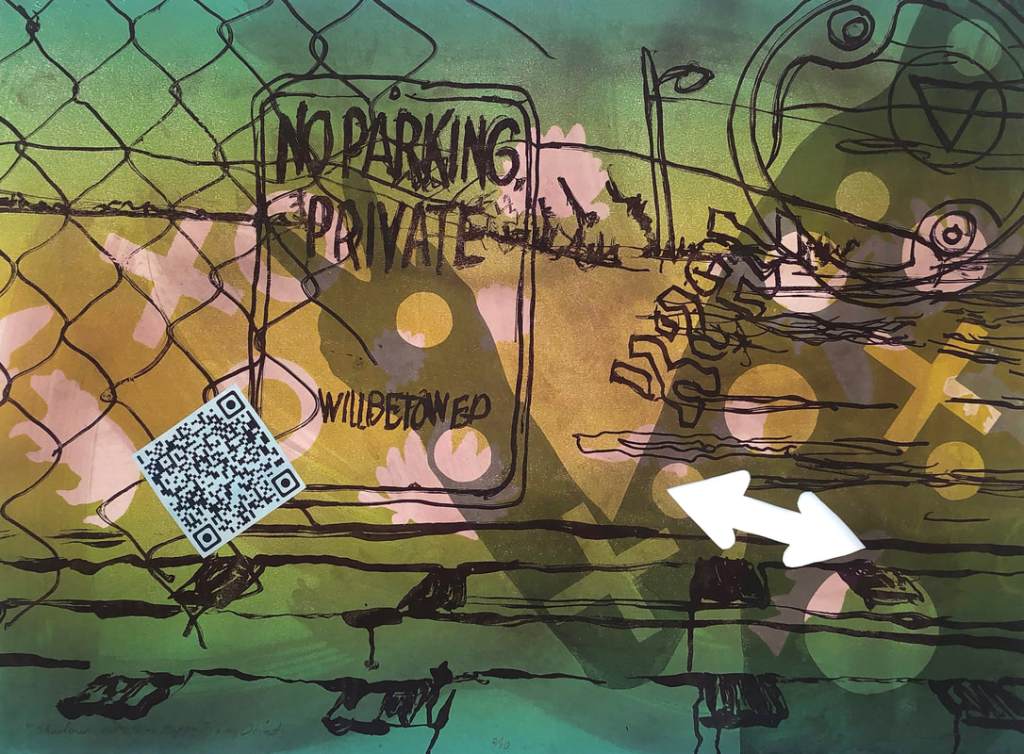
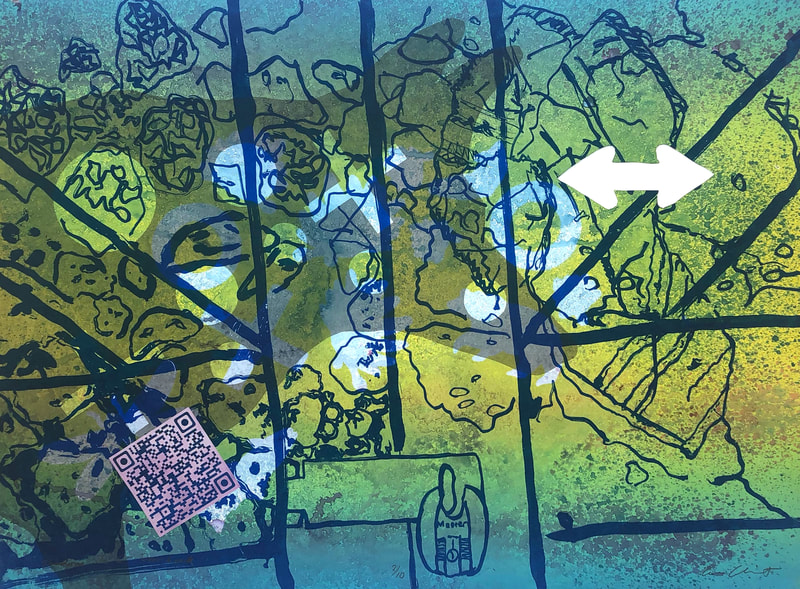
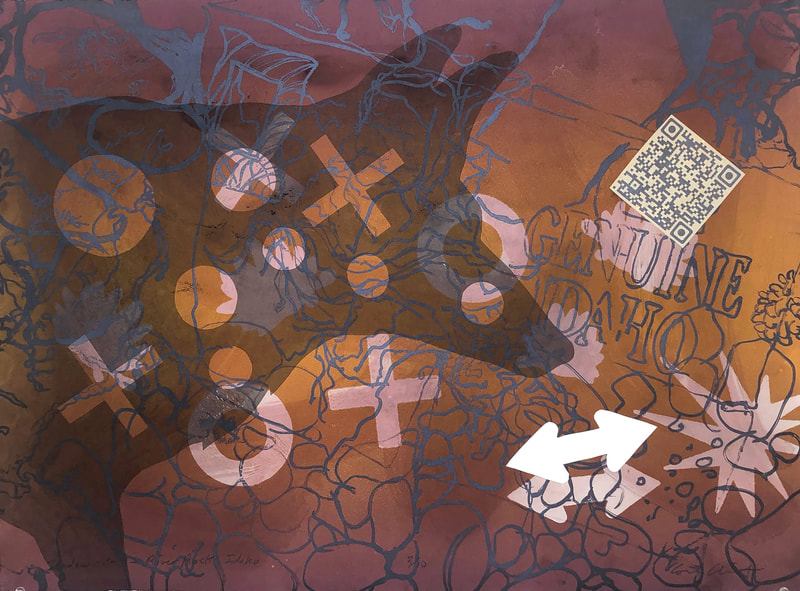


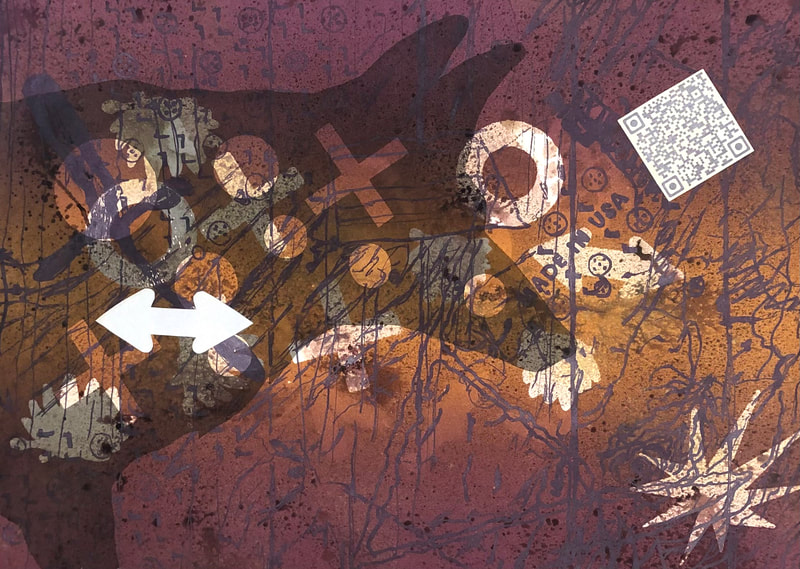

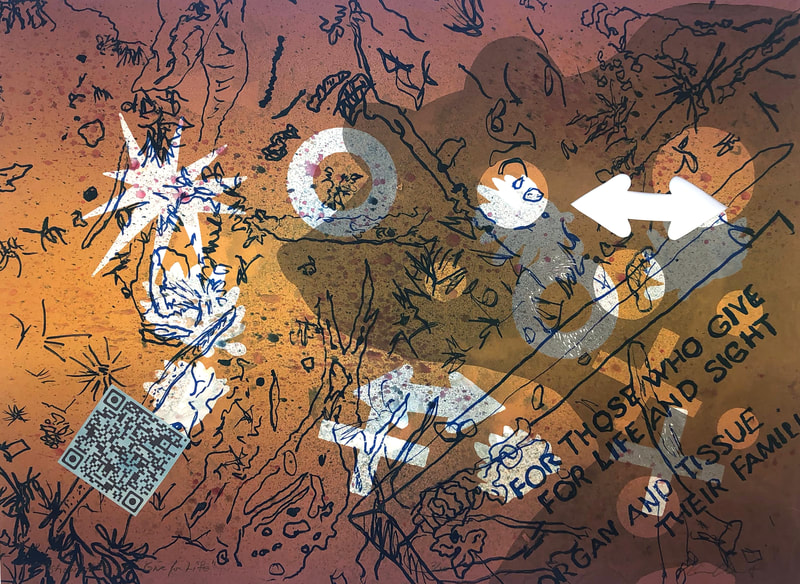
- 25 monotype, screenprint, and mixed media requiring 150 – 300 linear feet
- 3 crates of 100 – 200lbs each
- Available January 2024 – December 2026
- Rental Fees: 6-week – $600, 7 – 12-week – $1100
Corwin (Corky) Clairmont [enrolled member of the Confederated Salish and Kootenai Tribes] is a celebrated visual and conceptual artist whose decades of work have included printmaking, mixed media, sculpture and installation. He is professor emeritus at Salish Kootenai College, where he directed the fine art department.
Clairmont’s works of art continued to challenge the cultural and ecological effects of European settlement upon the land previously inhabited by his indigenous ancestors for thousands of years. From Salish Kootenai treaty rights to Montana highway development, Clairmont has addressed both deep-seated and contemporary issues. His work is always site specific, land based, and activist in nature. This exhibition includes work from two different Yellowstone Pipe Line series and the artist’s recent Shadows series, created at MATRIX Press. Clairmont uses the same strategies of collage, cut out (the positive of which is left in the landscape to disintegrate), and photography in each series to engage the viewer and connect his print directly with a site.
After earning an undergraduate degree from the University of Montana, Clairmont continued his graduate studies with a fellowship at San Fernando State University and in 1971 completed his education with a Master of Arts degree from the California State University in Los Angeles. He spent the next 14 years within the Los Angeles art scene and worked as the printmaking department head at the Otis/Parsons Art Institute. In 1984 Clairmont returned to Montana, where he continued exhibiting his art and administrative work while a professor at the newly accredited Salish Kootenai College, developing the SKC fine arts department and degree program.
Corwin’s artwork has been exhibited nationally as well as in China, Germany, Norway, New Zealand, France US Embassy Kinshasa, Democratic Republic of the Congo, Africa. Awards include the Ford foundation, National Endowment of the Arts, Eiteljorg Fellowship Award, Individual Artist Award Missoula, Mt., and the State of Montana 2008 Governors Award for Visual Arts. He currently serves on the State Board of the Montana Arts Council.
Artist Statement for Shadows series
An enrolled member of the Confederated Salish & Kootenai Tribes, I chose to do a series of 10 random site-specific prints in the Missoula area by exploring these sites and documenting through photographs and on site drawings representative items found at each of these sites. The one square mile area chosen is an important cultural and traditional food gathering place of the Salish Tribal People for over 10, 000 years. This area contained abundant bitterroot plants in the once open grounds, and bull trout found in the Clark Fork River. By visiting these sites I wanted to remember our Salish ancestors as well as the plants, and animals now displaced by the Missoula community and University. I also wanted to document changes that have occurred or what may have remained the same. Education is high on what is important to our tribal communities and although the bitterroot is no longer harvested on the one square mile land area, it is hoped that higher education opportunities will equally contribute to the positive economy, cultural strength, health and good future of our tribal people and for those yet to come.
There are different concepts, symbols, and images used in the prints. The collaborative nature of the artwork is important as it pertains to the need to depend on one another to accomplish objectives. It promotes consideration of one another’s ideas and suggestions. We learn more when this happens and are better able to understand the need for diversity to survive and grow. Collaboration is about compromise and respect of others and their ideas. The random selection of each site reinforces the concept that each place is important and should be respected as it effects or impacts the great circle or whole of life.
The shadow images represent the animals and ancestors who have been displaced or are not with us physically, who have walked this landscape. The shadow is something that you can’t touch or hold, much like the spirits of our ancestors whose silent presence we can’t touch but remain with us. The two-headed arrow, a highway symbol of caution, was cut from each print. It is a reminder that we need to stop and choose which direction we are to take. We are at a critical point in our climate of global warming that we no longer have the flexibility of making wrong choices. -Corwin Clairmont
 MAGDA
MAGDA 